Water passes through deck-board gaps. A designed collection and discharge system may help shelter areas beneath an elevated deck.
Why drainage is needed
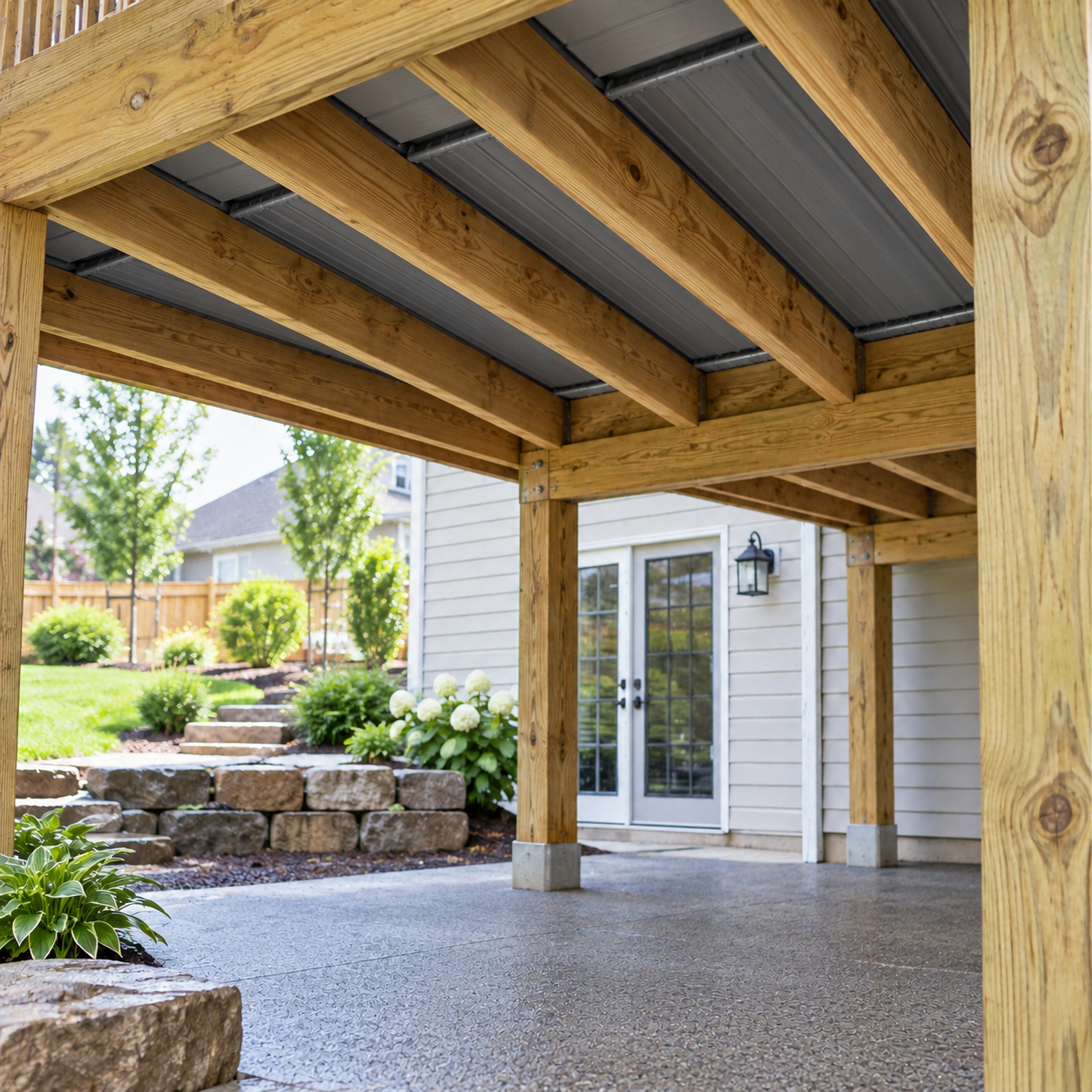
Water passes through deck-board gaps. A designed collection and discharge system may help shelter areas beneath an elevated deck.
Above-joist drainage
Typically installed around or over joists before decking, with troughs or channels directing water toward an outlet. Plan it early because the deck surface can limit later access.
Below-joist drainage
Installed underneath framing to catch water coming through the deck. Some systems fit retrofits, but access, ventilation, water handling and ceiling details vary.
Protect the structure too
Ask where residual moisture goes, whether wood framing stays exposed to water, and how the assembly can be inspected. Not all systems function alike.
Evaluate the full project
Compare outlet placement, slope, maintenance, cold-weather performance, lighting, aesthetics and warranty. Read under-deck drainage systems.
General planning guidance. Confirm applicable codes, specifications and structural details with qualified local professionals.
How the two drainage approaches work
An above-joist system typically catches water before or as it reaches the framing plane, while a below-joist system collects water underneath the joists. Each needs proper slope, collection components and an outlet away from the building.
New construction versus existing decks
For a new deck, coordinate drainage with framing, decking and future lighting before construction. Retrofitting an existing deck requires inspection of the framing and enough access for the system’s installation and maintenance procedures.
Questions to ask before choosing
- Where is water intercepted and discharged?
- What moisture can still contact the framing?
- How are drains inspected and cleaned?
- What happens with leaves, ice or debris?
- Can the system accommodate a finished ceiling and electrical fixtures?
Frequently asked questions
Is deck drainage the same as waterproofing?
No. Systems make different claims about collection, framing protection and weather exposure. Review their instructions and warranty.
Can I install drainage on an older deck?
Often, subject to deck condition, clearances and the chosen system’s requirements.