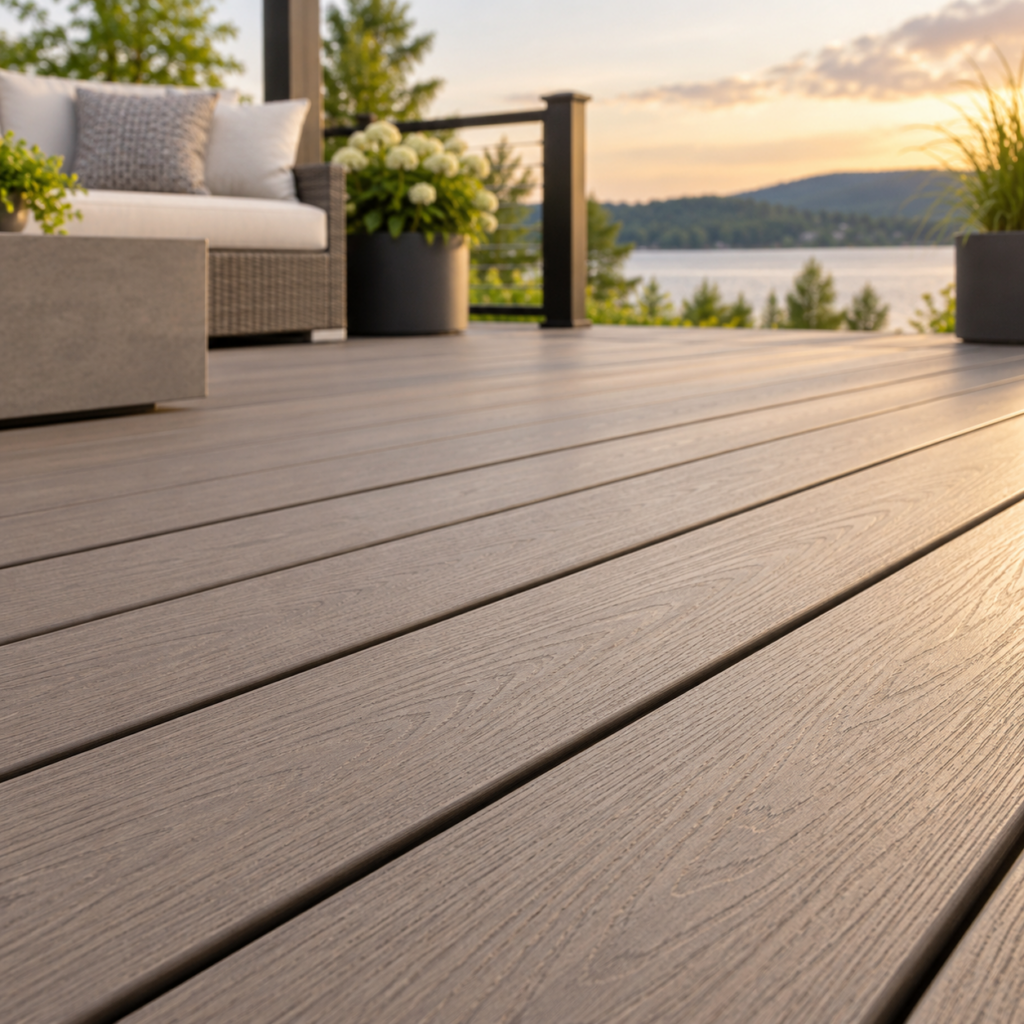
Composite Decking
Low-maintenance decking available in a wide range of colors and wood-look finishes.
Plan Your Deck The Smarter Way
New to deck construction? Explore our illustrated guide to deck anatomy and the parts of a deck →
Deck projects come with a lot of decisions. Compare the major materials, systems, and finishing options in plain English so you can understand the tradeoffs before talking to a builder.
Your decking is the surface you see, walk on, and maintain. The biggest differences are appearance, upfront cost, maintenance, moisture resistance, and expected service life.
Low-maintenance decking available in a wide range of colors and wood-look finishes.
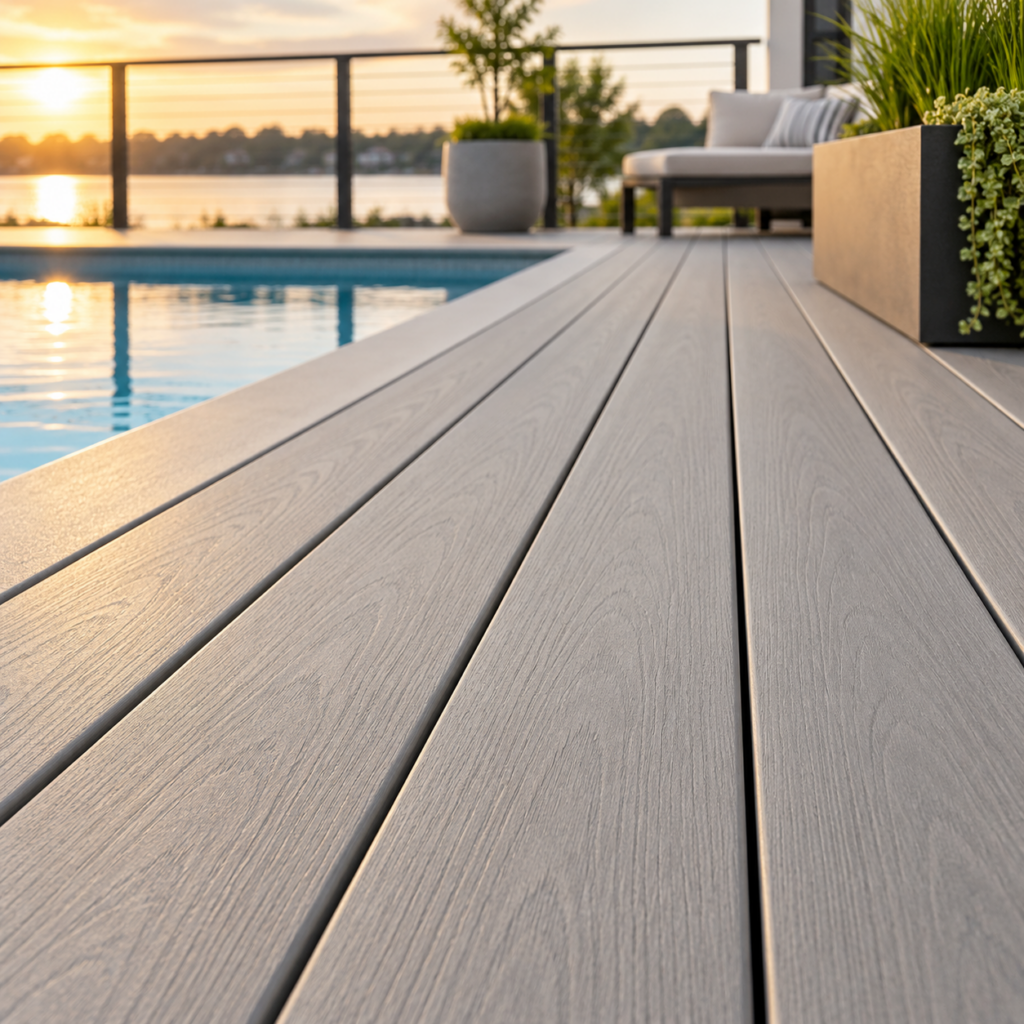
Premium, lightweight decking with very low maintenance and excellent moisture resistance.
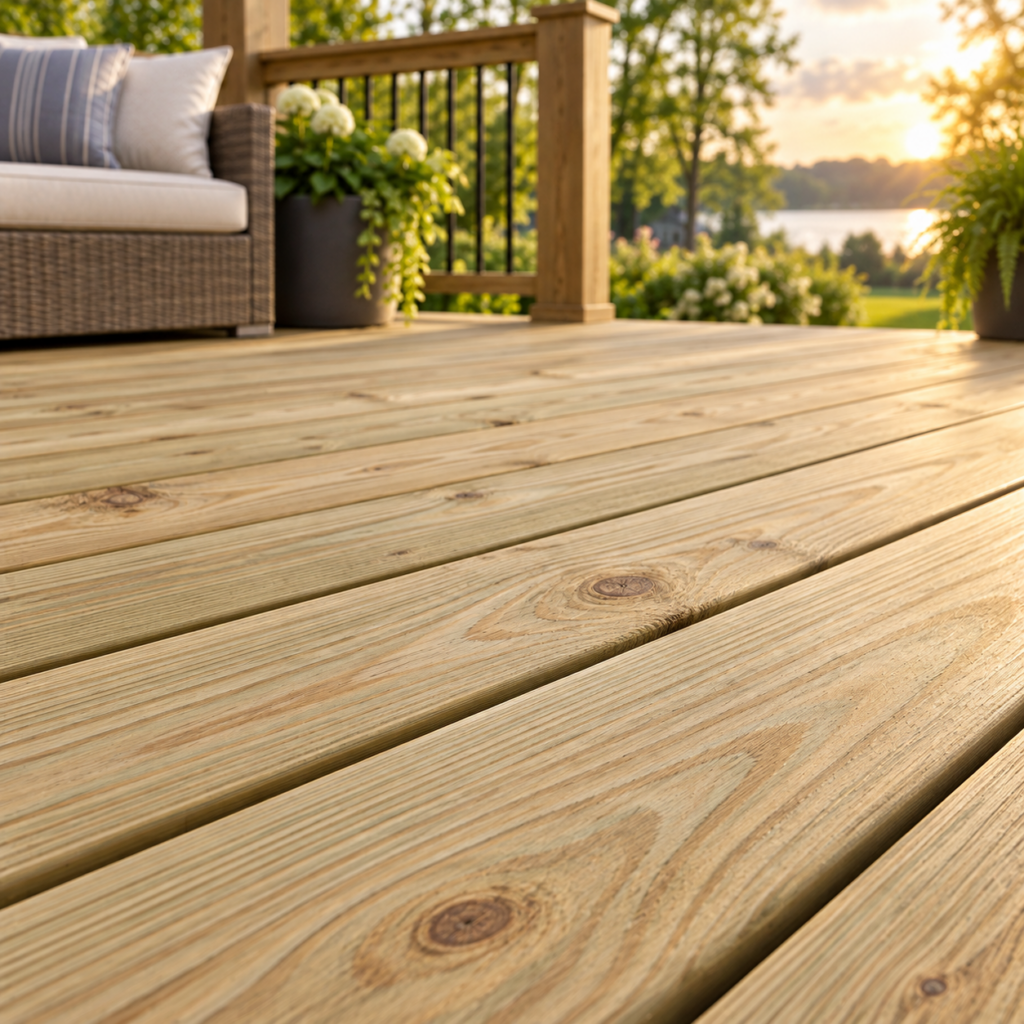
A budget-friendly real wood option that typically requires ongoing staining, sealing, or painting.
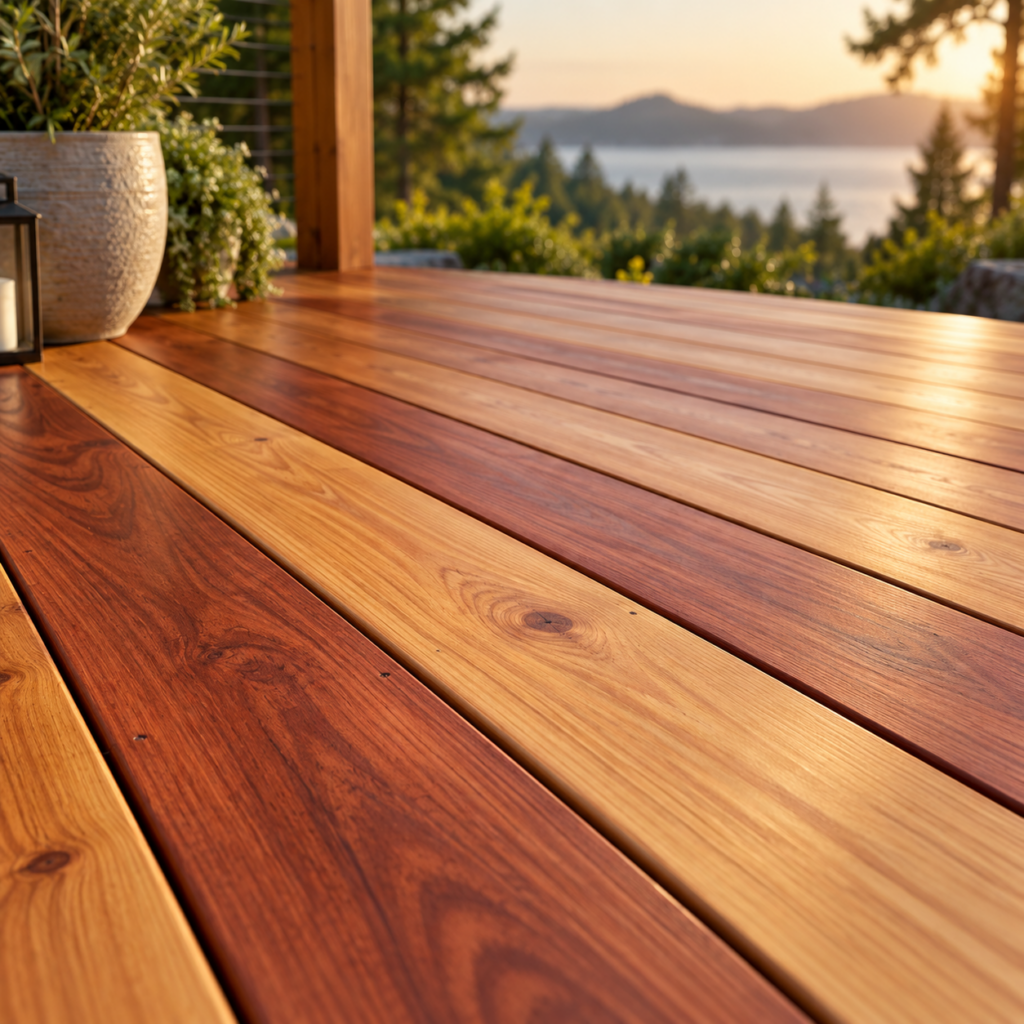
Natural wood options with a premium appearance and greater natural decay resistance than standard treated lumber.
| Decking Option | Decking Material Cost | Maintenance | Lifespan | Best For |
|---|---|---|---|---|
| Composite | $5–$16 / sq. ft. | Low | Long | Homeowners who want low maintenance and lots of style options |
| PVC | $5–$13 / sq. ft. | Very Low | Very Long | Premium projects, wet climates, and maximum moisture resistance |
| Pressure-Treated Wood | $2–$8 / sq. ft. | High | Moderate | Budget-conscious homeowners who prefer real wood |
| Cedar / Redwood | $4–$20 / sq. ft. | Moderate | Moderate–Long | Homeowners who want a natural, premium wood appearance |
2026 U.S. material-only planning ranges: decking surface boards per square foot, not the cost to build a complete deck. Excludes substructure, footings, railing, stairs, fasteners, waste, delivery and all labor. Cedar and redwood are combined for easy comparison; premium redwood grades can cost more.
Railing affects safety, appearance, openness, maintenance, and overall project cost. The system you choose can dramatically change how the finished deck feels.
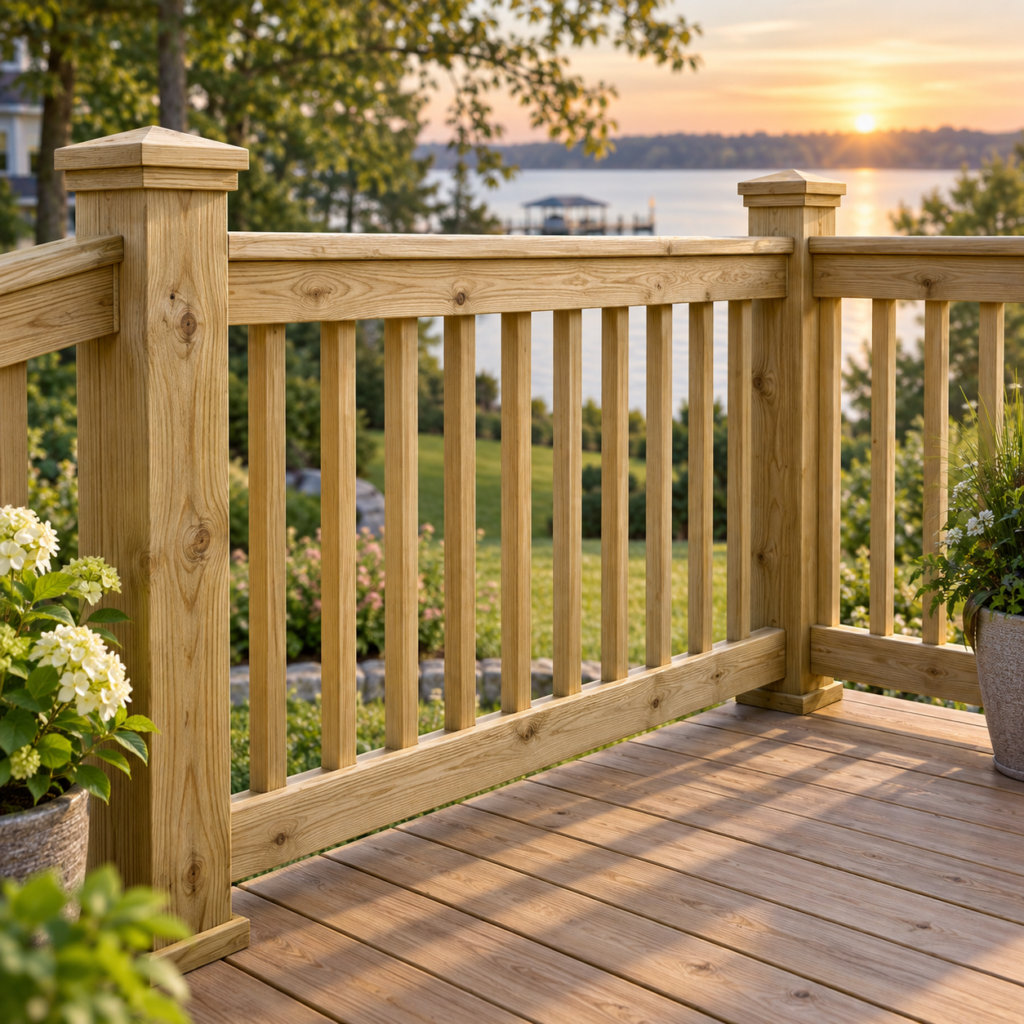
Traditional and affordable, but requires staining, sealing, or painting over time.
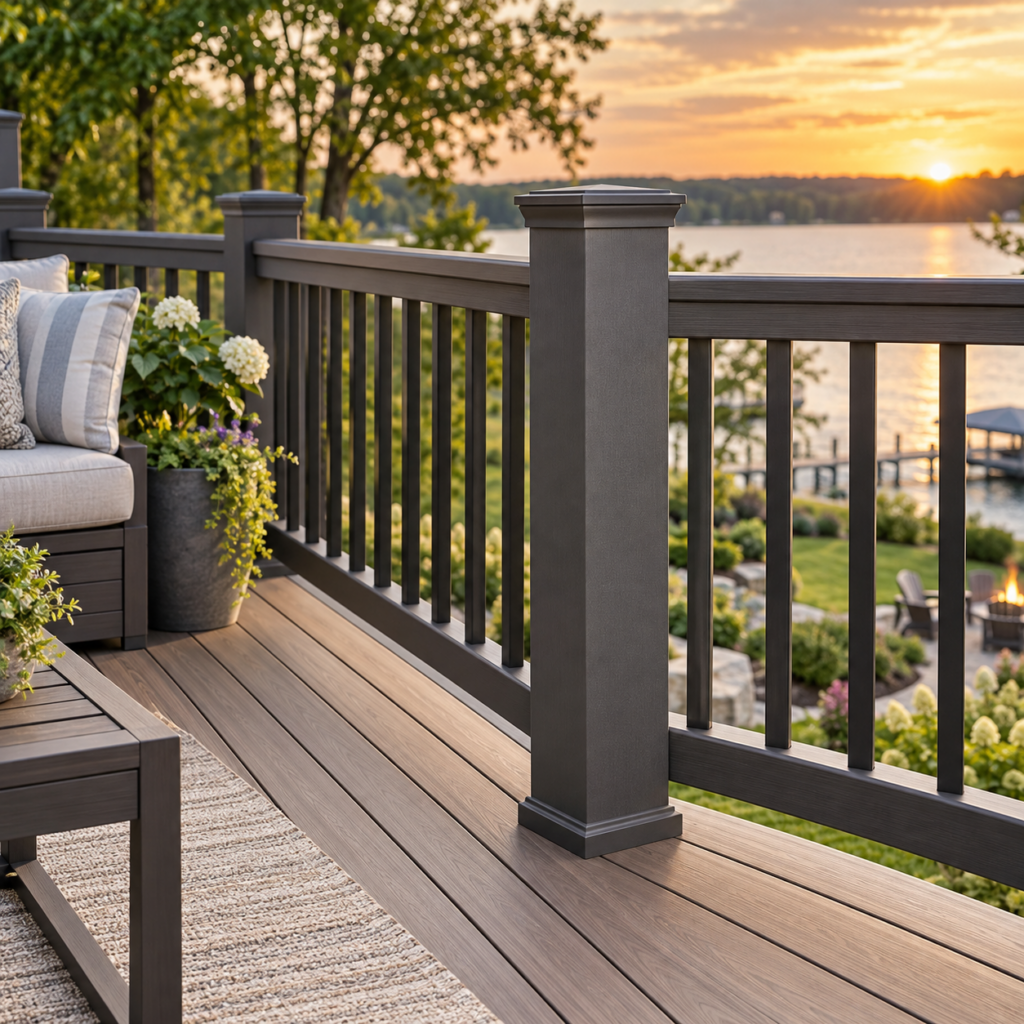
Low maintenance with a finished look and a wide range of coordinated styles and colors.
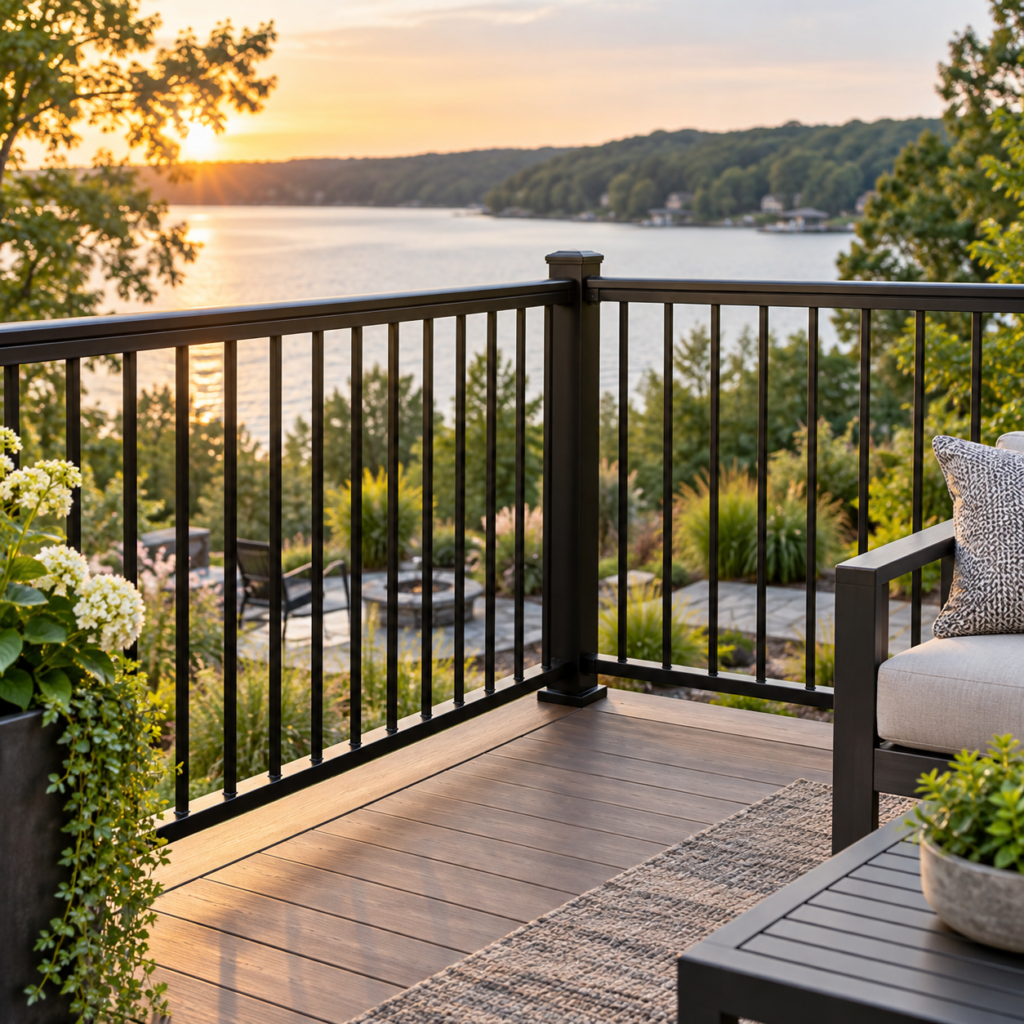
Slim, durable, and very low maintenance with a more open view.
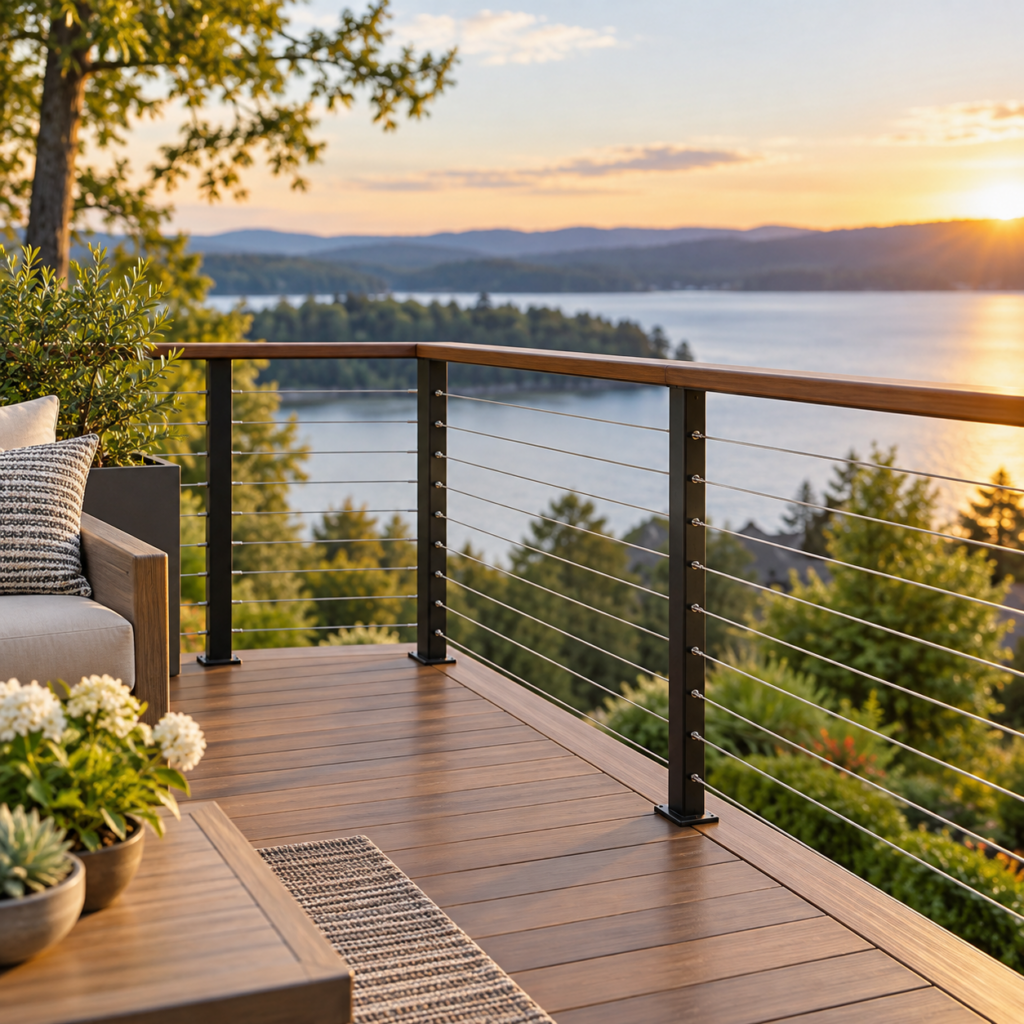
A premium modern system that minimizes visual obstruction.
| Railing Option | Railing Material Cost | Maintenance | View | Best For |
|---|---|---|---|---|
| Wood Railing | $15–$50 / linear ft. | High | Moderate | Budget-conscious projects and a traditional wood look |
| Composite Railing | $44–$95 / linear ft. | Low | Moderate | Low-maintenance decks with coordinated colors and finishes |
| Aluminum Railing | $59–$150 / linear ft. | Very Low | Good | Modern decks where durability and a more open view matter |
| Cable Railing | $98–$240 / linear ft. | Low | Excellent | Premium projects where preserving the view is a priority |
2026 U.S. material-only planning ranges: railing components per linear foot, including typical posts, rails and infill for common systems. Excludes installation labor, stair-specific components, delivery and custom details. The cost of posts and fittings varies significantly by design.
The deck frame supports everything above it. Water protection helps reduce repeated moisture exposure at joists, beams, fasteners, and the ledger connection.
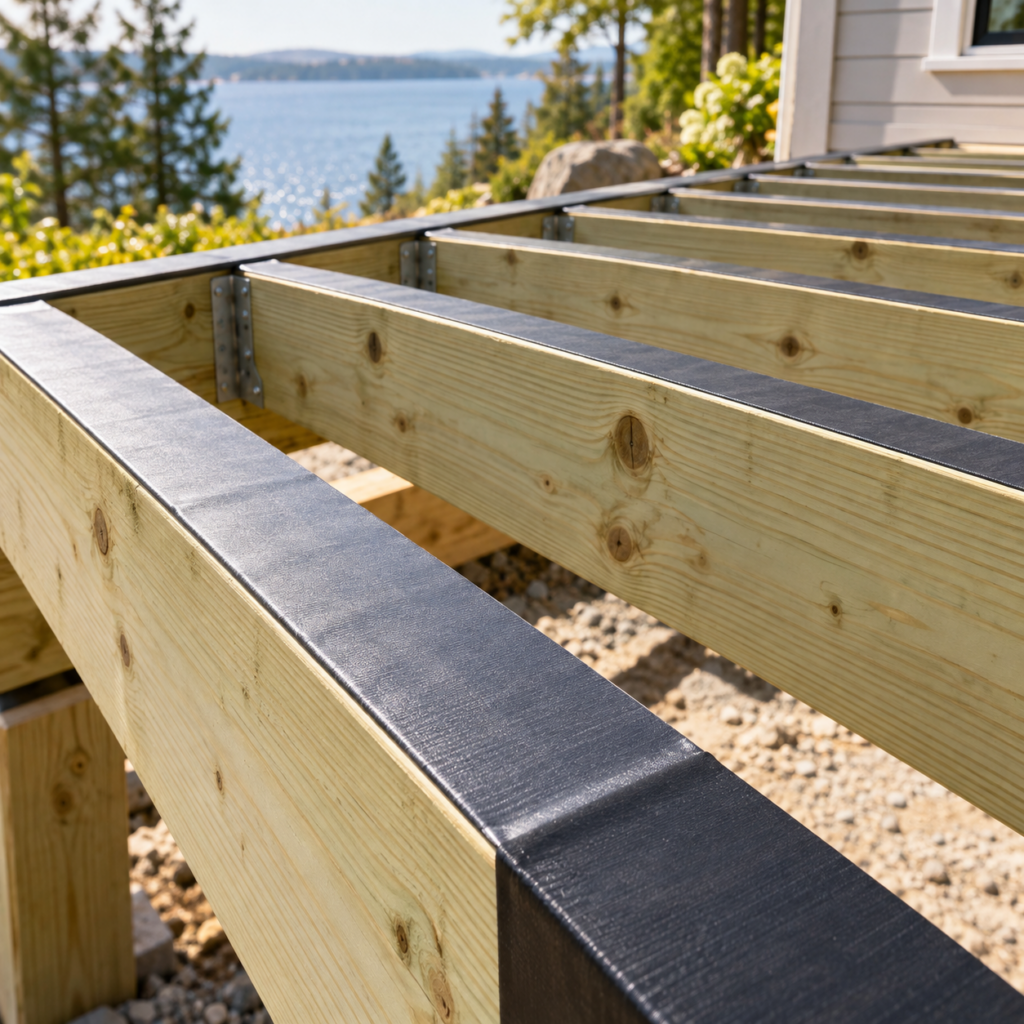
Self-adhered flashing tape installed over the tops of framing members to help keep water away from vulnerable wood.
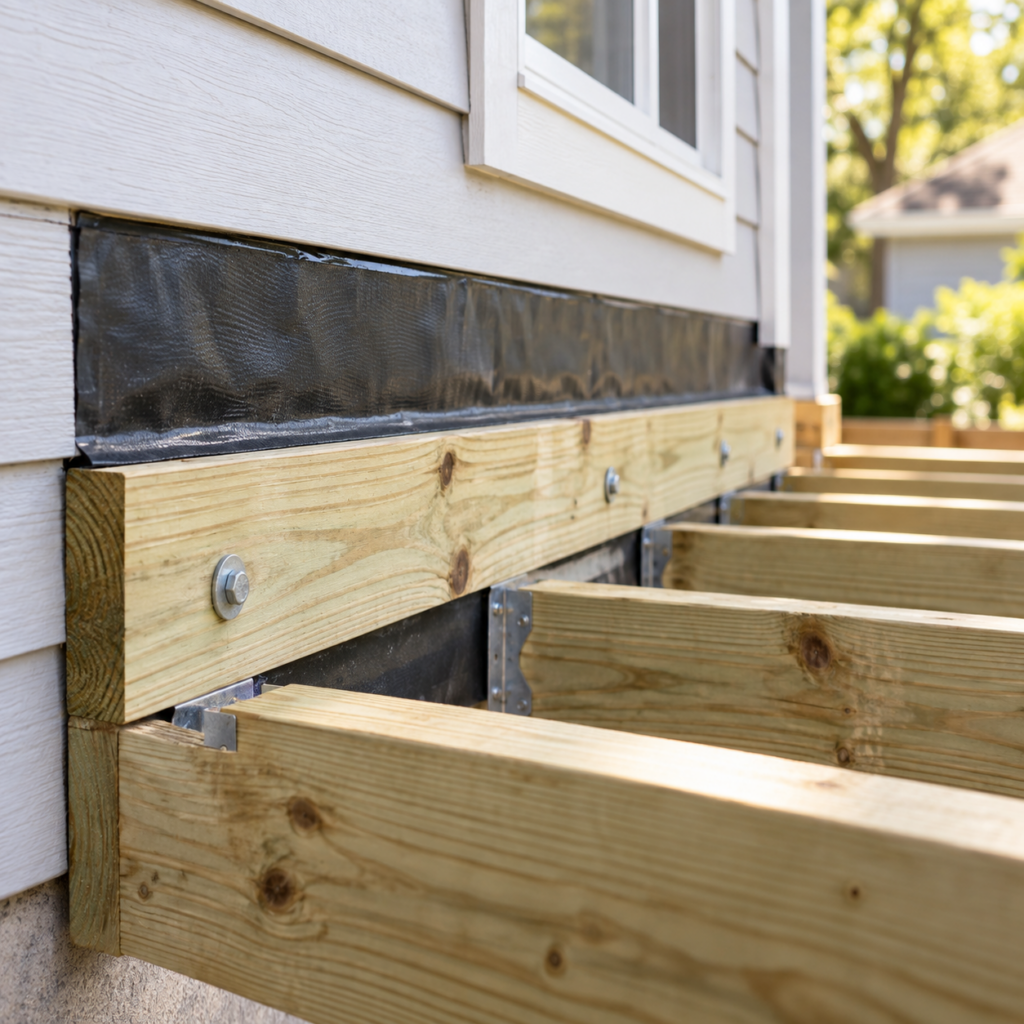
Waterproofing installed where an attached deck connects to the house.
| Type | Water Protection | Adhesion | Flexibility | Tape Material Cost | Deck Way Take |
|---|---|---|---|---|---|
| Acrylic Tape | Good | Good | Good | $0.28–$0.50 / linear ft. | Solid protection, but not our first choice for long-term deck framing. |
| Asphalt Tape | Good | Good | Moderate | $0.30–$0.65 / linear ft. | Lower cost, but typically thicker and less flexible than butyl. |
| Butyl Tape DECK WAY RECOMMENDED | Excellent | Excellent | Excellent | $0.35–$0.85 / linear ft. | Preferred for its strong waterproof seal, flexibility, and performance around fasteners. |
2026 U.S. material-only price ranges: per linear foot of approximately 2-inch-wide joist tape, not per roll or per square foot of deck. Acrylic examples commonly use 65-foot rolls; butyl and asphalt products may use 50- or 65-foot rolls. Beam tape is wider (often 3–4 inches) and costs more per linear foot. Prices vary by brand, width, roll length and quantity; exclude labor.
| Option | Material Cost | Water Protection | Seals Around Fasteners | Flexibility | Deck Way Take |
|---|---|---|---|---|---|
| Metal Flashing | $1–$7 / linear ft. | Moderate | Limited | Low | A traditional rigid flashing option that helps direct water away from the ledger. |
| Butyl Tape Flashing DECK WAY RECOMMENDED | $3–$7 / linear ft. | Excellent | Excellent | Excellent | Preferred because it creates a flexible waterproof barrier and seals around fasteners and irregular surfaces. |
2026 U.S. material-only price ranges: per linear foot along the ledger. Metal ranges cover common corrosion-resistant formed flashing through specialty profiles; butyl ranges reflect wider ledger-flashing membranes (roughly 6–11 inches, including premium aluminum-faced products). These are not identical products and may require different complementary flashing and sealing details. Installation labor is excluded. Follow manufacturer instructions and local code requirements.
Deck Way recommends butyl tape for joists and beams and butyl tape flashing at the ledger because it stays flexible, waterproofs well, and helps seal around fasteners.
An elevated deck can create another usable outdoor area below. The key difference between drainage systems is whether water is managed before or after it reaches the framing.
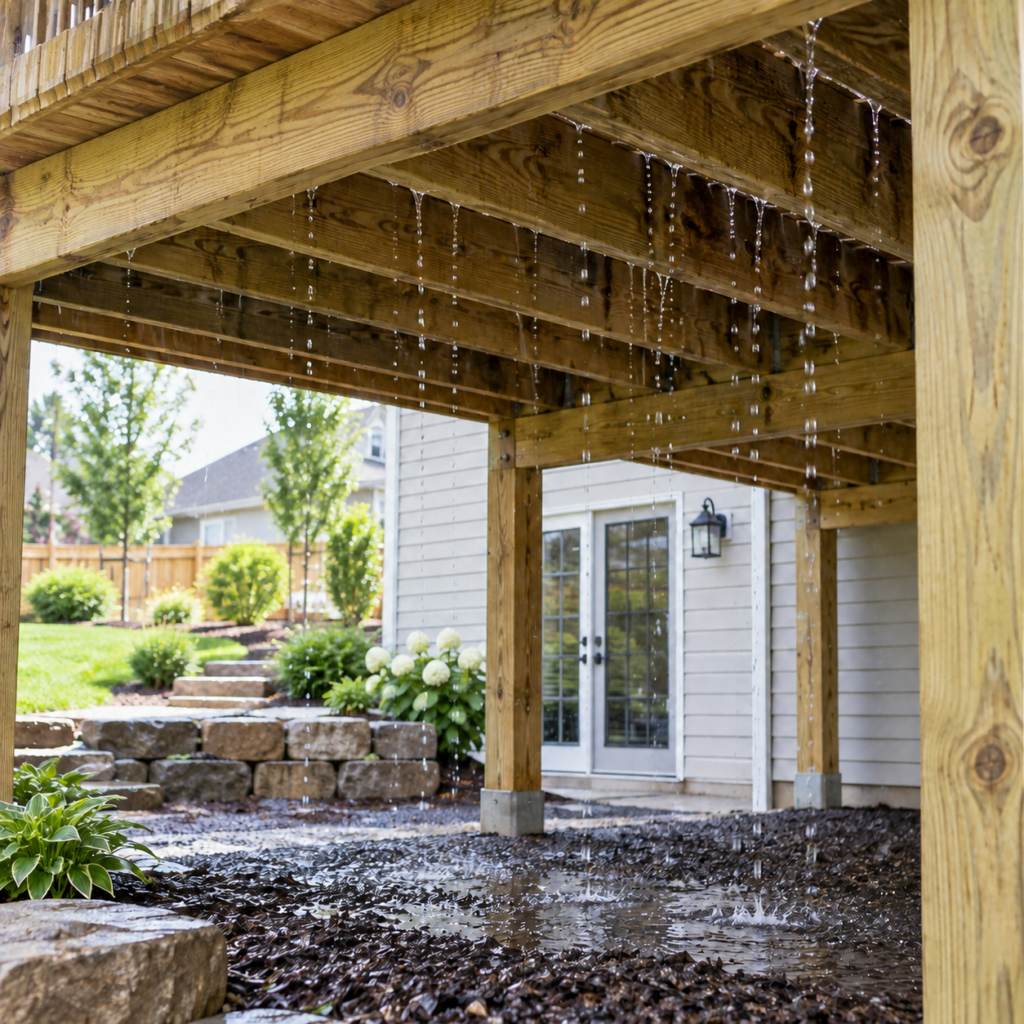
Rain passes through the decking and framing to the space below.
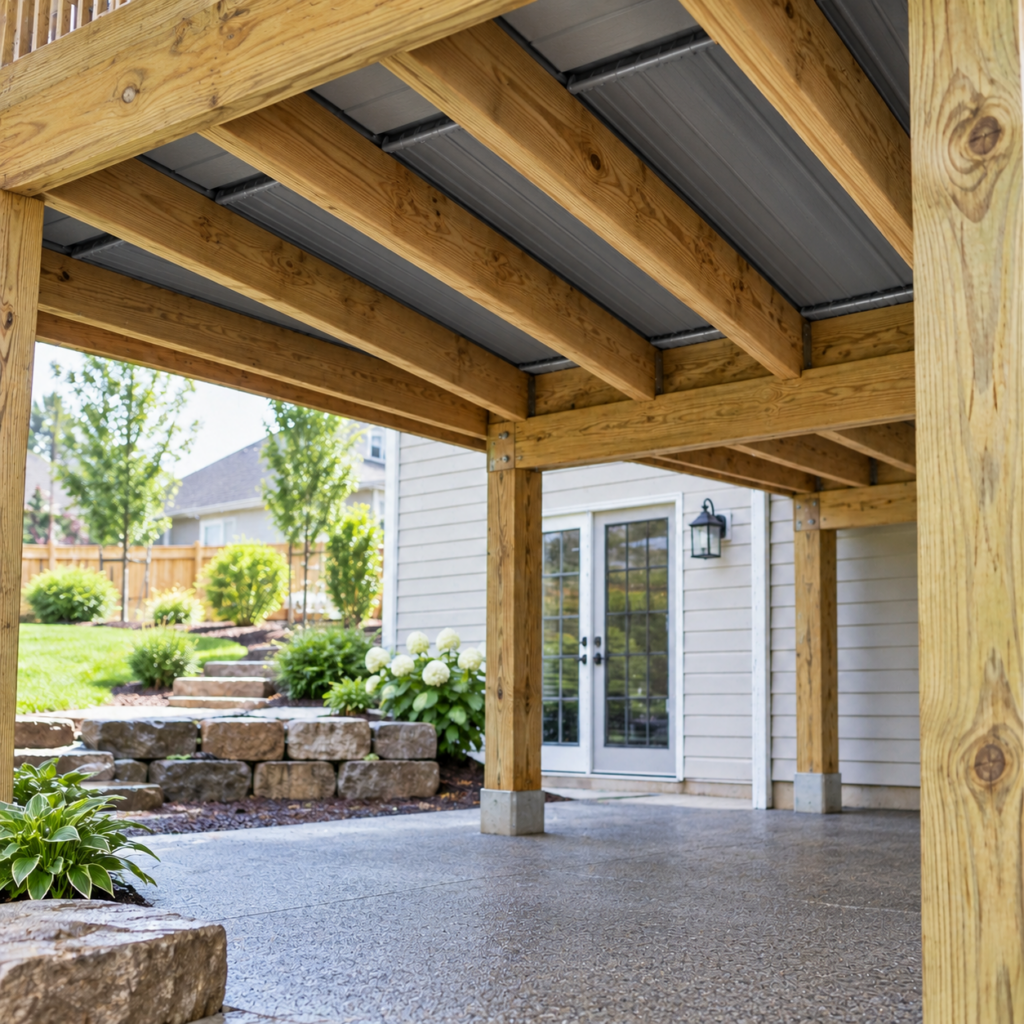
Installed above the joists and below the decking so water is managed before it reaches the framing.
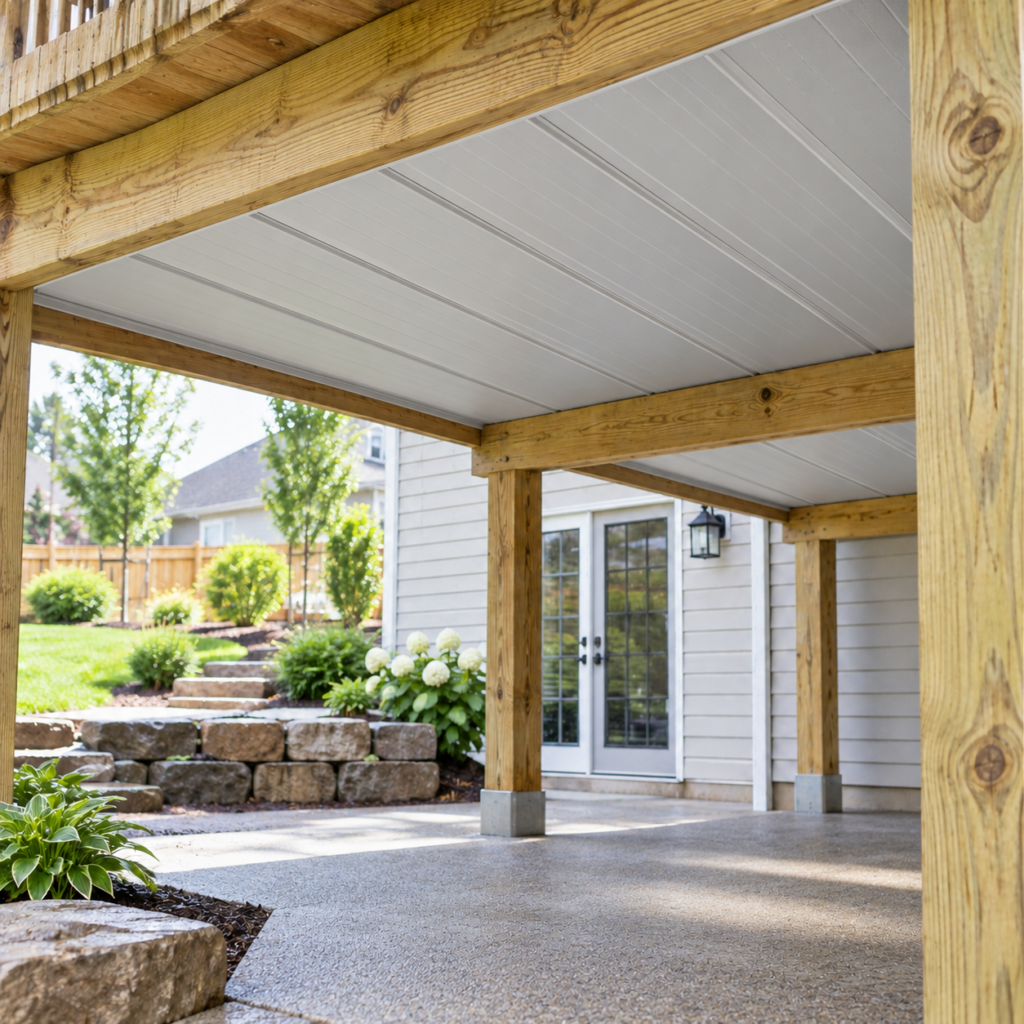
Installed underneath the framing to collect water after it passes through the deck structure.
| Drainage Option | Dry Space Below | Drainage Material Cost | Helps Protect Framing | When Water Is Managed | Best For |
|---|---|---|---|---|---|
| No Drainage System | No | $0 | No | Water passes through the deck | Decks where the area below does not need to remain dry |
| Above-Joist Drainage DECK WAY PREFERRED | Yes | $6–$9 / sq. ft. | Yes | Before water reaches framing | New decks where dry space and framing protection matter |
| Below-Joist Drainage | Yes | $4–$12 / sq. ft. | Limited | After water passes through framing | Existing decks where drainage is added later |
2026 U.S. material-only planning ranges: drainage-system components per square foot of deck area, before labor. Above-joist figures reflect trough-style systems; below-joist figures cover common panel and channel systems. Ceiling finishes, lighting, fans, deck-board removal and other project costs are excluded. No drainage system adds $0 in drainage materials.
For new construction, Deck Way prefers above-joist drainage because water is captured before reaching the joists and beams while creating dry usable space below.
Fascia covers the exposed edge of the deck framing and gives the project a more intentional, finished appearance.
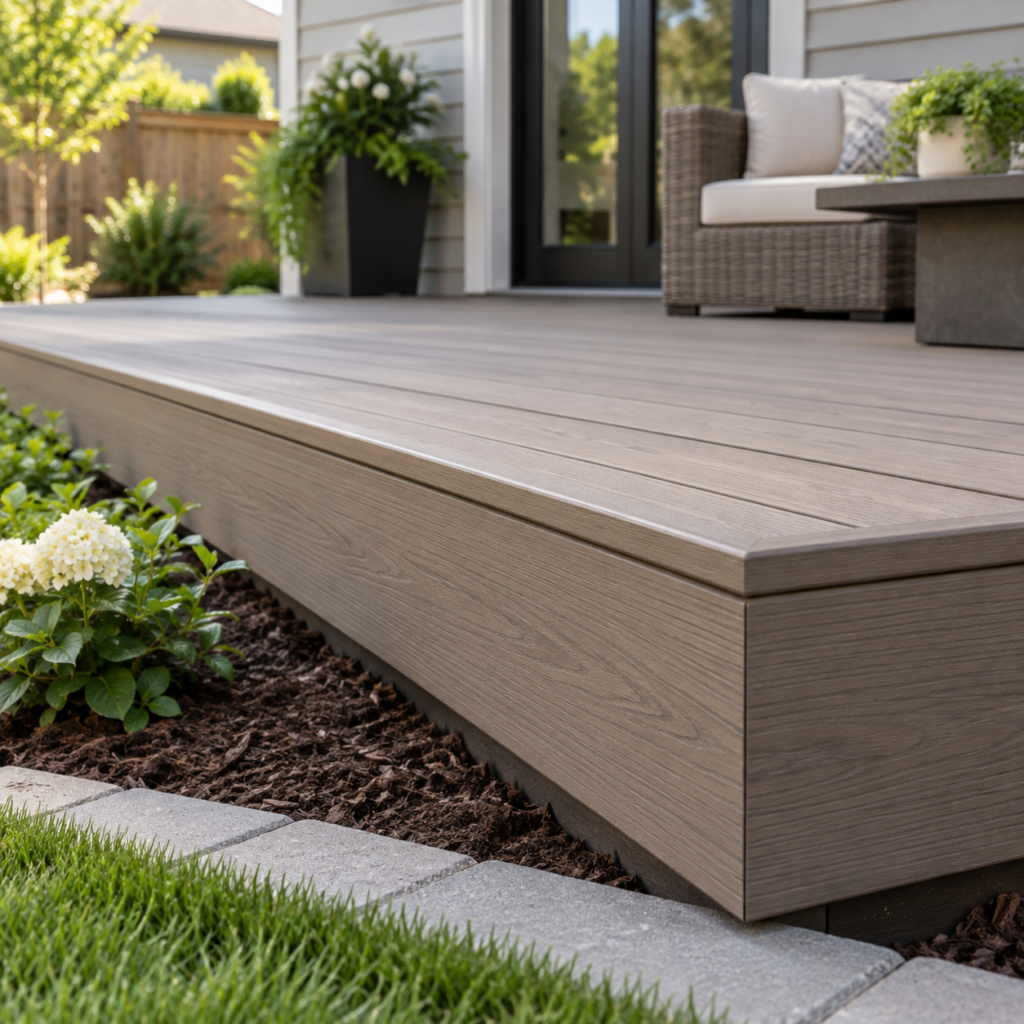
A clean, coordinated, low-maintenance finish for composite and PVC decks.
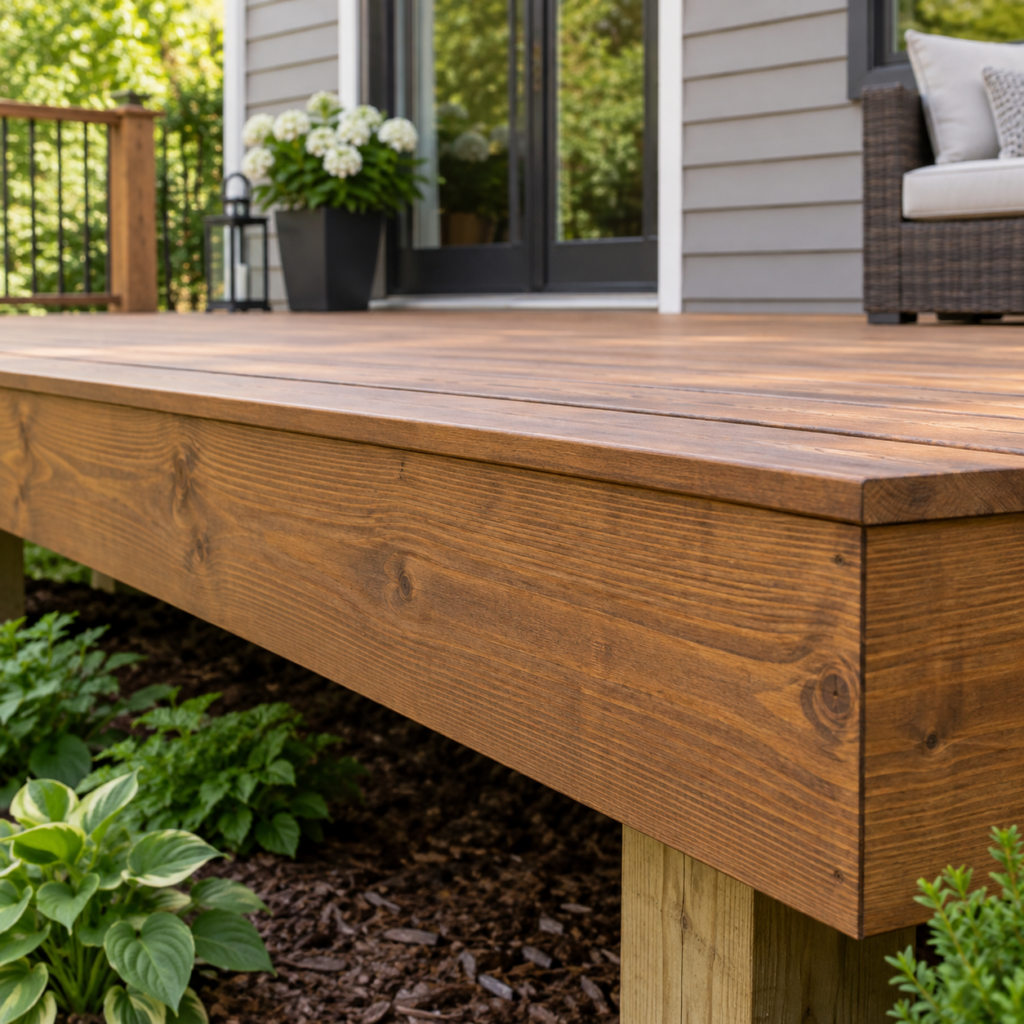
A lower-cost option that can be stained or painted to match the project.
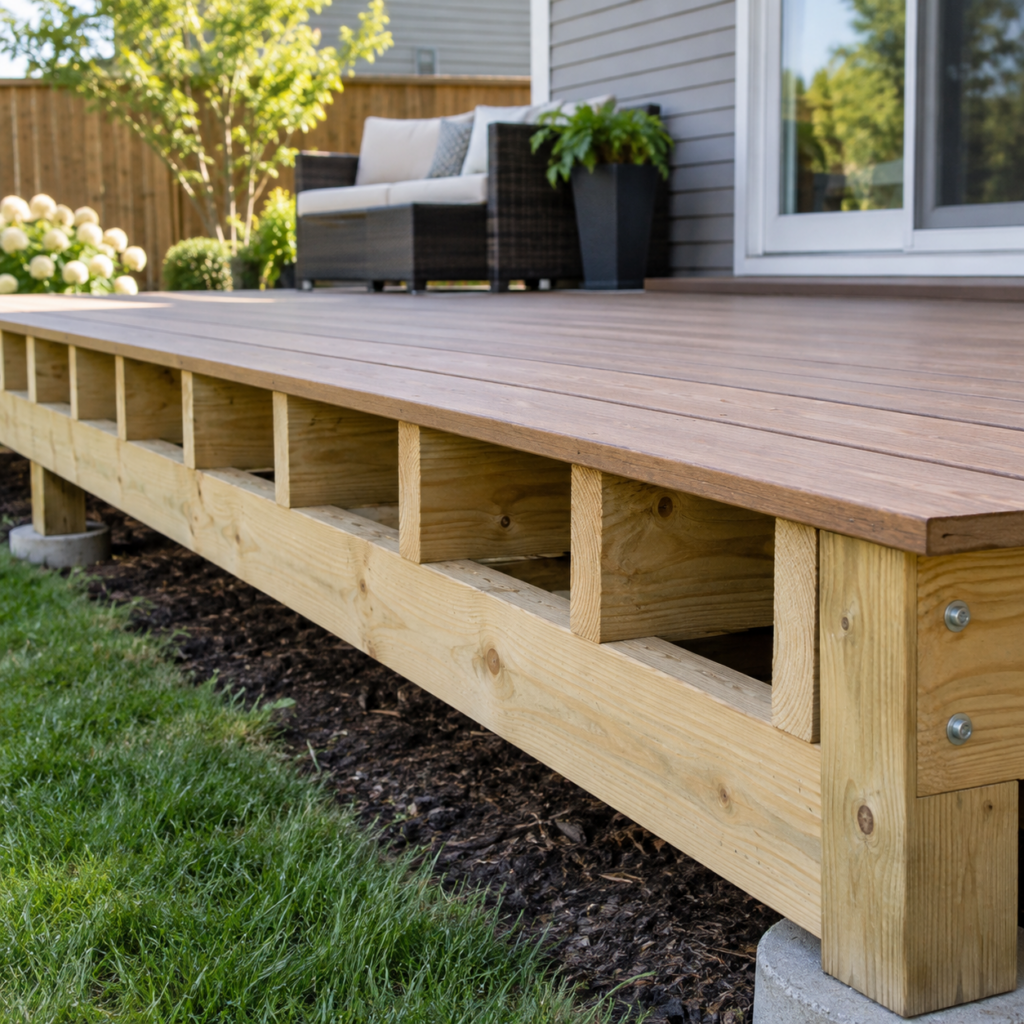
The lowest-cost approach, but the outside framing remains visible.
| Option | Fascia Material Cost | Maintenance | Finished Appearance | Best For |
|---|---|---|---|---|
| Matching Composite Fascia DECK WAY PREFERRED | $9–$15 / linear ft. | Low | Excellent | Composite and PVC decks where a coordinated finish matters |
| Wood Fascia | $2–$5 / linear ft. | Moderate to High | Good | Wood decks and tighter budgets |
| Exposed Framing | $0 | Low | Basic | Utility-focused decks where appearance is less important |
Approximate 2026 U.S. material-only ranges: fascia boards per linear foot, before labor, fasteners, delivery and waste. Pricing depends on board dimensions, brand and material grade. Exposed framing requires no fascia-board purchase.
The frame is the structural system beneath the decking. Most residential decks use pressure-treated wood, but steel framing is another premium option.
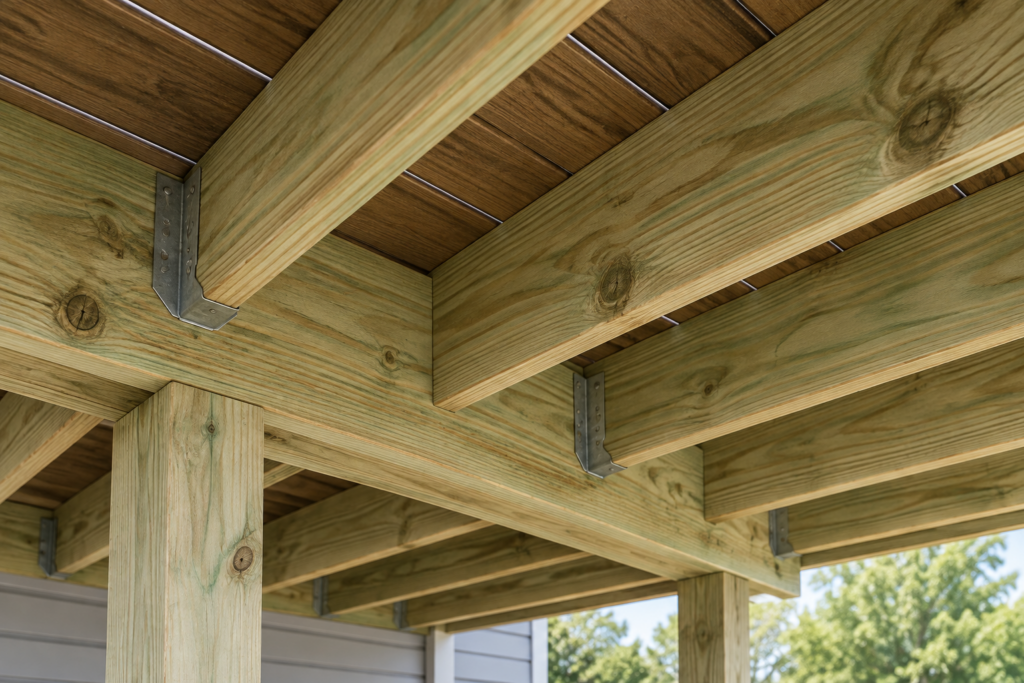
The standard framing material for most residential decks because it is affordable, widely available, and familiar to builders.
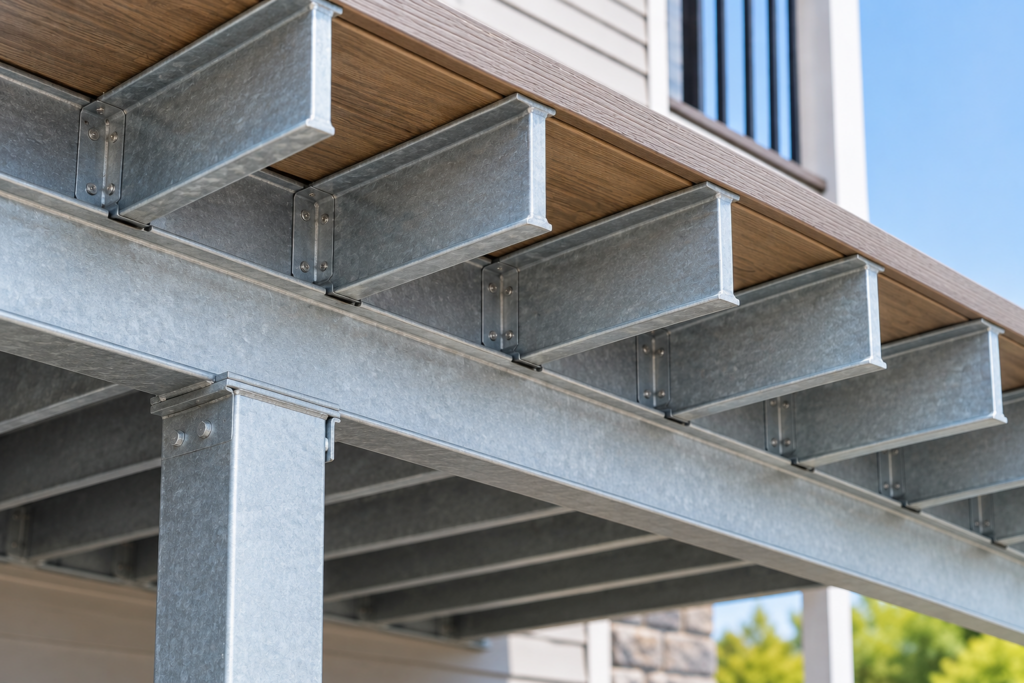
A premium framing system with excellent dimensional stability and resistance to rot, insects, warping, and shrinking.
| Framing Option | Framing Material Cost | Longevity | Dimensional Stability | Best For |
|---|---|---|---|---|
| Pressure-Treated Wood MOST COMMON | $5–$12 / sq. ft. | Good | Moderate | Most residential deck projects |
| Steel Framing | $10–$30 / sq. ft. | Excellent | Excellent | Premium projects and homeowners prioritizing long-term stability |
Approximate 2026 U.S. framing-material ranges: per square foot of deck footprint for framing members and typical associated materials. Excludes labor, decking boards, railings, stairs, permits, engineering, delivery and significant foundation/site work. Hardware, joist spans, deck elevation and steel system specifications can materially affect pricing.
Pressure-treated lumber generally provides the best balance of cost, availability, strength, and builder familiarity. If you choose wood framing, protecting vulnerable areas from moisture is worth considering.
You don't need to finalize every material choice before talking to a professional. Find a local deck builder to discuss your project, or look for a lumberyard if you're sourcing materials yourself.
All figures are approximate material-only U.S. retail planning ranges, reviewed November 2026. They do not include installation labor or represent a builder's bid. Units and included components vary: decking boards (per square foot), railing systems (per linear foot), drainage materials (per square foot of deck), fascia boards (per linear foot) and structural framing materials (per square foot). Costs for posts, hardware, waste, taxes, freight, footings, finishes and accessories may be additional. Do not add category ranges together without checking scope and overlap. Ask a local supplier for current product pricing and a builder for a project-specific installation proposal.
Sources and benchmarks: G-Tape acrylic joist tape; Trex Protect butyl joist tape; Asphalt adhesive flashing example; Metal ledger flashing examples; Wider butyl ledger tape; HomeGuide composite/PVC board prices; HomeGuide cedar decking; Angi decking materials; DecksDirect railing materials; Angi drainage material costs; Retail fascia prices; and Angi steel framing materials. These estimates are not endorsed price schedules.