Most composite deck boards mix polymer materials with wood fibers or other fillers. PVC decking primarily uses polymer without wood flour. Formulations and protective caps differ by brand and line.
Regardless of which decking material you select, start with correctly aligned framing. See why a consistent joist plane matters before installing decking.
Understand the construction
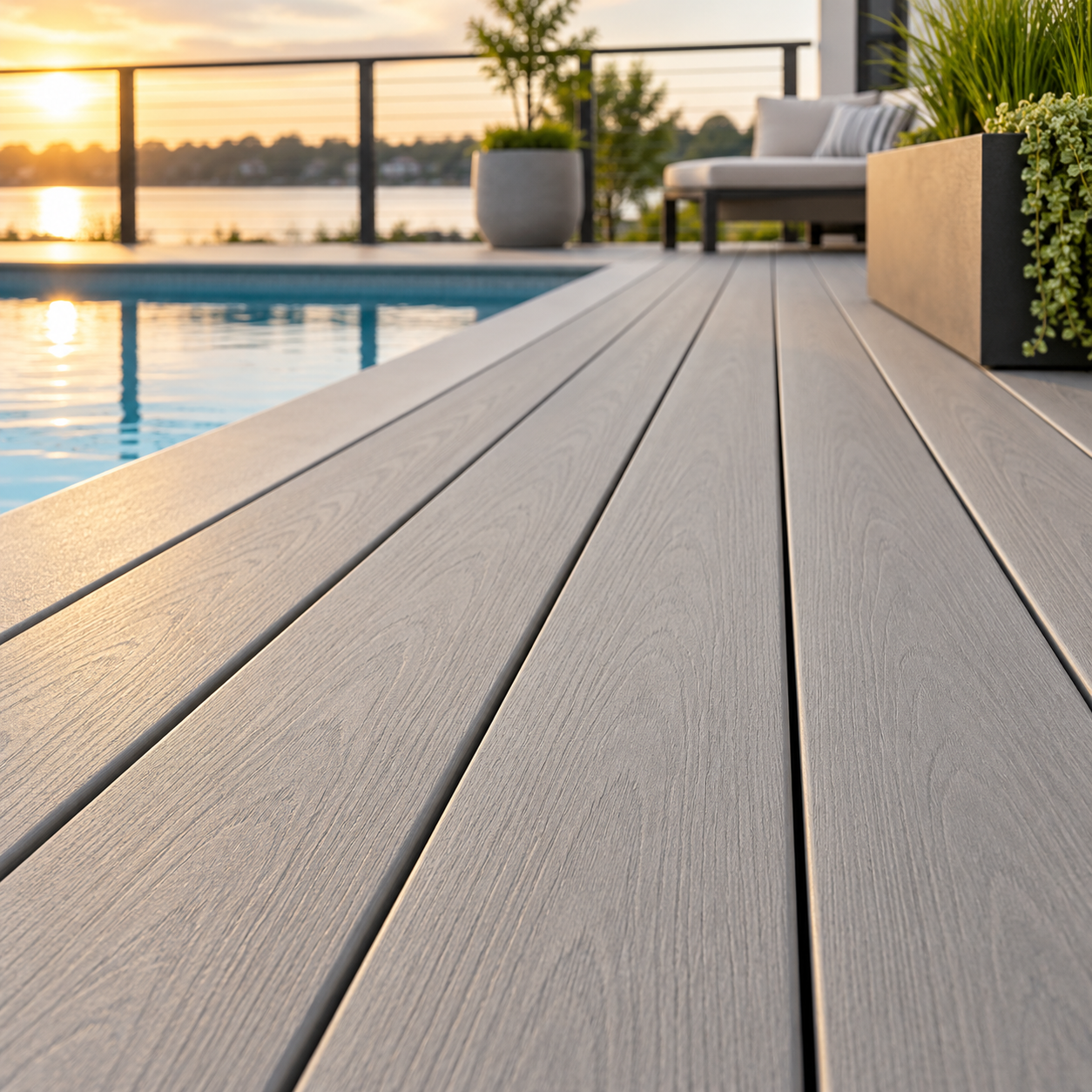
Most composite deck boards mix polymer materials with wood fibers or other fillers. PVC decking primarily uses polymer without wood flour. Formulations and protective caps differ by brand and line.
Compare care and moisture performance
Both are typically cleaned rather than regularly stained. PVC avoids wood-fiber absorption, but neither category eliminates the need for drainage, ventilation, sound framing and proper installation.
Think about heat and feel
Dark boards can become hot in direct sunlight. Temperature, texture, weight and stiffness vary by product; assess physical samples at your site.
Compare total installed costs
Consider trim, fastening systems, waste and labor, not only board price. Follow each manufacturer’s joist spacing, gap and fastening instructions.
Choose based on your priorities
Evaluate appearance, climate, warranty, budget and availability. See composite versus wood and all material comparisons.
General planning guidance. Confirm applicable codes, specifications and structural details with qualified local professionals.
Composite vs. PVC decking at a glance
Both materials are commonly sold as lower-maintenance alternatives to wood, but construction differs. Many composite boards combine polymers with wood fibers or other fillers, while PVC boards do not contain wood flour. Performance still varies by product line and cap design.
| Consideration | Composite | PVC |
|---|---|---|
| Composition | Polymer and fibers or fillers | Predominantly polymer |
| Routine care | Cleaning, typically no conventional staining | Cleaning, typically no conventional staining |
| Moisture | Depends on cap and core formulation | No wood fibers in the core |
Compare the total installed cost
Include fasteners, starter clips, fascia, stair treads, waste, blocking and labor rather than comparing board prices alone. Check the exact manufacturer requirements for joist spacing, end gaps and fastening. A border pattern or diagonal layout can increase framing and material needs.
Evaluate real samples
View samples beside your house in direct sun and shade. Compare texture, color, stiffness, warranty terms and manufacturer cleaning instructions. Dark boards can become hot in direct sunshine regardless of category.
Frequently asked questions
Is PVC always cooler than composite?
No. Surface temperature depends on the specific board, color and exposure. Compare real products rather than making a category-wide assumption.
Can I use the same fasteners for both?
Not necessarily. Follow the manufacturer-approved fastening and gapping instructions for the product you select.